Charlie turned 7 recently. Many of you may remember him from earlier posts, and for those who may be newer to this page, I will link parts of his story below.
Charlie and my son have developed a special friendship over the past year (see this post on their developing friendship), and we were invited to his birthday party. Charlie’s mom, Kim, is so skilled at creating competent roles for him! At the party, I had the opportunity to take in and truly appreciate all the little ways Kim made this event special and successful for her son.
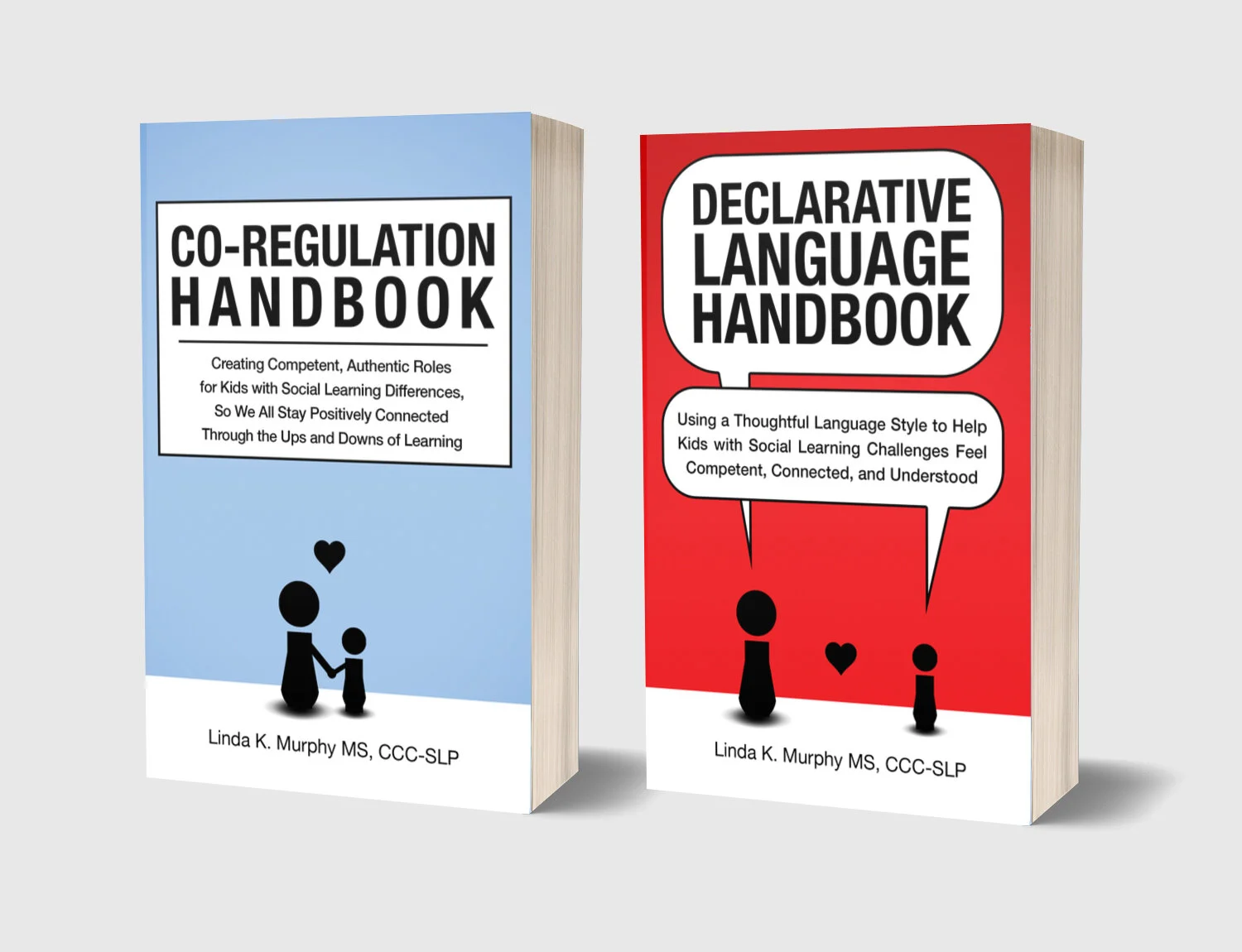
Kim has been practicing declarative language, co-regulation, and a competent roles mindset, for a while now. I know she can be a GREAT TEACHER to others, so I want to share some of the small but important decisions she made to create an amazing, successful birthday party for Charlie. Chapter 10 of 𝐶𝑜-𝑅𝑒𝑔𝑢𝑙𝑎𝑡𝑖𝑜𝑛 𝐻𝑎𝑛𝑑𝑏𝑜𝑜𝑘 is dedicated to developing positive peer interactions, and I was excited to see some of the ideas and decision points playing out at the party! This is a longer post, but Kim’s ideas are worth sharing in their entirety. Perhaps you have a party to plan soon and can benefit from her thoughtful decisions.
𝟏. 𝐓𝐡𝐞 𝐋𝐨𝐜𝐚𝐭𝐢𝐨𝐧 🌷
The party was outside at a playground near their house that Charlie frequently visits. Kids could move freely between a basketball court, a small climbing structure, a swing set, and a grassy area. The familiarity of the location, and being outside with freedom to move in a way that was best for him (and all the kids, really) was perfect for Charlie.
𝐾𝑖𝑚’𝑠 𝑖𝑑𝑒𝑎 𝑖𝑛 𝑎 𝑛𝑢𝑡𝑠ℎ𝑒𝑙𝑙: 𝑝𝑖𝑐𝑘 𝑎 𝑙𝑜𝑐𝑎𝑡𝑖𝑜𝑛 𝑡ℎ𝑎𝑡 𝑖𝑠 𝑜𝑢𝑡𝑠𝑖𝑑𝑒, 𝑓𝑎𝑚𝑖𝑙𝑖𝑎𝑟, 𝑤𝑖𝑡ℎ 𝑙𝑜𝑡𝑠 𝑜𝑓 𝑟𝑜𝑜𝑚 𝑡𝑜 𝑚𝑜𝑣𝑒 𝑠𝑎𝑓𝑒𝑙𝑦
𝟐. 𝐏𝐚𝐫𝐭𝐲 𝐀𝐜𝐭𝐢𝐯𝐢𝐭𝐢𝐞𝐬 🎉
Kim had a variety of play choices for the kids throughout the party, that she knew Charlie enjoyed. In addition, each play opportunity could be done in 𝑝𝑎𝑟𝑎𝑙𝑙𝑒𝑙 (meaning kids could do alongside each other, providing space and opportunity to observe one another’s ideas and actions), or could be done in a more 𝑟𝑒𝑐𝑖𝑝𝑟𝑜𝑐𝑎𝑙 manner (meaning kids would take turns or coordinate actions a bit more). There were also more than one of each item. So: plenty of choices, and decreased wait time.
The beauty of this set up was that Charlie always had a choice available that he enjoyed, and could weave in and out of competent roles for himself as he was ready. For example, at times he watched peers operate a remote-control car, with joy and laughter (assuming role of: “observer”), while at other times, he operated one himself in proximity to peers (role of “driver”). Kids also had chalk available to them, and could draw alongside each other (“drawers”), enjoying each other’s creations. And the stomp-rockets were a hit! Kids could take turns being “stompers”, or line up two sets and stomp at the same time. With this toy, it is also fun and sometimes enough to just be a “watcher”, as peers explore how high or how far they can get theirs to go. Importantly, the climbing structure and swings were close by to provide both movement and sensory input when kids needed a break from the action.
Charlie moved through the different activities at a pace that worked for him, approaching, connecting, and forming memories with peers successfully across a range of activities that bring him joy. It really was exactly right for him!
𝐾𝑖𝑚’𝑠 𝑖𝑑𝑒𝑎 𝑖𝑛 𝑎 𝑛𝑢𝑡𝑠ℎ𝑒𝑙𝑙: 𝑝𝑟𝑜𝑣𝑖𝑑𝑒 𝑐ℎ𝑜𝑖𝑐𝑒𝑠 𝑡ℎ𝑎𝑡 𝑐𝑎𝑛 𝑏𝑒 𝑑𝑜𝑛𝑒 𝑖𝑛 𝑝𝑎𝑟𝑎𝑙𝑙𝑒𝑙 𝑎𝑛𝑑/𝑜𝑟 𝑎 𝑟𝑒𝑐𝑖𝑝𝑟𝑜𝑐𝑎𝑙 𝑚𝑎𝑛𝑛𝑒𝑟, 𝑑𝑒𝑐𝑟𝑒𝑎𝑠𝑒 𝑤𝑎𝑖𝑡 𝑡𝑖𝑚𝑒 𝑏𝑦 ℎ𝑎𝑣𝑖𝑛𝑔 𝑚𝑜𝑟𝑒 𝑡ℎ𝑎𝑛 𝑜𝑛𝑒 𝑜𝑓 𝑒𝑎𝑐ℎ 𝑖𝑡𝑒𝑚, 𝑎𝑛𝑑 𝑖𝑛𝑐𝑙𝑢𝑑𝑒 𝑎 𝑠𝑝𝑎𝑐𝑒 𝑤ℎ𝑒𝑟𝑒 𝑘𝑖𝑑𝑠 𝑐𝑎𝑛 𝑚𝑜𝑣𝑒 𝑓𝑟𝑒𝑒𝑙𝑦.
𝟑. 𝐄𝐚𝐭𝐢𝐧𝐠 𝐚𝐧𝐝 𝐃𝐫𝐢𝐧𝐤𝐢𝐧𝐠 🎂
Charlie was looking forward to his cupcakes from the minute the party started. Kim knew not to stretch it out or make him wait too long. As soon as all the invited guests had arrived, we got on with a Happy Birthday song and delicious cupcakes. Making Charlie wait too long for the cake would have created unnecessary anxiety. Letting the kids have their cake as soon as possible also allowed them to then go back and play some more. Kim also had small water bottles for the kids. So, they could each grab their own easily … and no worries about spills outside!
𝐾𝑖𝑚’𝑠 𝑖𝑑𝑒𝑎 𝑖𝑛 𝑎 𝑛𝑢𝑡𝑠ℎ𝑒𝑙𝑙: 𝐷𝑜𝑛’𝑡 𝑤𝑎𝑖𝑡! 𝐿𝑒𝑡 𝑡ℎ𝑒𝑚 𝑒𝑎𝑡 𝑐𝑎𝑘𝑒 𝑠𝑜𝑜𝑛𝑒𝑟 𝑟𝑎𝑡ℎ𝑒𝑟 𝑡ℎ𝑎𝑛 𝑙𝑎𝑡𝑒𝑟.
𝟒. 𝐒𝐞𝐭-𝐮𝐩 & 𝐂𝐥𝐞𝐚𝐧-𝐮𝐩 🚀
I was there for set-up and watched Kim engage Charlie in many competent roles, and use declarative language to invite him to make small decisions for his party. For example, she commented, “I was thinking we can put the toys and activities on the basketball court. Charlie, would you like to decide where the chalk/cars/stomp rockets, etc. go?” and then used co-regulation: “Great let’s set them up together!” I was not there for clean-up, but knowing Kim, I imagine she included Charlie in the same way after the party ended.
𝐾𝑖𝑚’𝑠 𝑖𝑑𝑒𝑎 𝑖𝑛 𝑎 𝑛𝑢𝑡𝑠ℎ𝑒𝑙𝑙: 𝐼𝑛𝑐𝑙𝑢𝑑𝑒 𝑦𝑜𝑢𝑟 𝑐ℎ𝑖𝑙𝑑 𝑎𝑠 𝑎 𝑝𝑎𝑟𝑡𝑛𝑒𝑟 𝑖𝑛 𝑡ℎ𝑒 𝑝𝑟𝑜𝑐𝑒𝑠𝑠 𝑜𝑓 𝑠𝑒𝑡-𝑢𝑝 𝑎𝑛𝑑 𝑐𝑙𝑒𝑎𝑛-𝑢𝑝, 𝑎𝑛𝑑 𝑜𝑓𝑓𝑒𝑟 𝑡ℎ𝑒𝑚 𝑡ℎ𝑒 𝑜𝑝𝑝𝑜𝑟𝑡𝑢𝑛𝑖𝑡𝑦 𝑡𝑜 𝑚𝑎𝑘𝑒 𝑠𝑚𝑎𝑙𝑙 𝑑𝑒𝑐𝑖𝑠𝑖𝑜𝑛𝑠. 𝑇ℎ𝑖𝑠 𝑎𝑑𝑑𝑠 𝑡𝑜 𝑡ℎ𝑒𝑖𝑟 𝑜𝑤𝑛𝑒𝑟𝑠ℎ𝑖𝑝 𝑜𝑓 𝑡ℎ𝑒 𝑝𝑎𝑟𝑡𝑦 𝑎𝑛𝑑 𝑝𝑒𝑟𝑠𝑜𝑛𝑎𝑙 𝑎𝑔𝑒𝑛𝑐𝑦 𝑖𝑛 𝑡ℎ𝑒 𝑚𝑜𝑚𝑒𝑛𝑡!
𝟓. 𝐓𝐡𝐞 𝐓𝐢𝐦𝐞 𝐚𝐧𝐝 𝐋𝐞𝐧𝐠𝐭𝐡 𝐨𝐟 𝐭𝐡𝐞 𝐏𝐚𝐫𝐭𝐲 ⌚️
The party was mid-morning, and lasted about 1 to 1½ hours. No need to make this an all-day event! From past peer experiences, both Kim and Charlie knew that keeping peer interaction opportunities short (i.e., 45 minutes to 1 hour) is best for him and his overall self-regulation. She wanted Charlie to be happy and excited, while not becoming overwhelmed or dysregulated, and she arranged the time window of the party accordingly. (See this post on Charlie’s self-awareness for more on this idea).
𝐾𝑖𝑚’𝑠 𝑖𝑑𝑒𝑎 𝑖𝑛 𝑎 𝑛𝑢𝑡𝑠ℎ𝑒𝑙𝑙: 𝐹𝑖𝑔𝑢𝑟𝑒 𝑜𝑢𝑡 𝑡ℎ𝑒 𝑡𝑖𝑚𝑒 𝑙𝑖𝑚𝑖𝑡 𝑡ℎ𝑎𝑡 𝑖𝑠 𝑏𝑒𝑠𝑡 𝑓𝑜𝑟 𝑦𝑜𝑢𝑟 𝑐ℎ𝑖𝑙𝑑, 𝑎𝑛𝑑 𝑡𝑖𝑚𝑒 𝑡ℎ𝑒 𝑝𝑎𝑟𝑡𝑦 𝑎𝑐𝑐𝑜𝑟𝑑𝑖𝑛𝑔𝑙𝑦 𝑠𝑜 𝑡ℎ𝑎𝑡 𝑒𝑣𝑒𝑟𝑦𝑜𝑛𝑒 𝑒𝑛𝑑𝑠 𝑜𝑛 𝑎 ℎ𝑖𝑔ℎ 𝑛𝑜𝑡𝑒, 𝑎𝑛𝑑 𝑤𝑎𝑙𝑘𝑠 𝑎𝑤𝑎𝑦 𝑤𝑖𝑡ℎ 𝑝𝑜𝑠𝑖𝑡𝑖𝑣𝑒 𝑚𝑒𝑚𝑜𝑟𝑖𝑒𝑠 𝑜𝑓 𝑡ℎ𝑒 𝑒𝑥𝑝𝑒𝑟𝑖𝑒𝑛𝑐𝑒.
𝟔. 𝐍𝐮𝐦𝐛𝐞𝐫 𝐨𝐟 𝐆𝐮𝐞𝐬𝐭𝐬 🧑🏾🤝🧑🏼
There were about 9-10 kids invited to the party, all of whom have a special place in Charlie’s life. If the party had been inside, this likely would have been too loud and too busy for Charlie. But Kim’s thoughtful location could handle the number of kids that Charlie wanted to invite. (In fact, a few unfamiliar kids walking through the playground at the time of the party ended up joining in the fun too, spotlighting what a welcoming and inclusive environment Kim had created).
𝐾𝑖𝑚’𝑠 𝑖𝑑𝑒𝑎 𝑖𝑛 𝑎 𝑛𝑢𝑡𝑠ℎ𝑒𝑙𝑙: 𝑇𝑜𝑜 𝑏𝑢𝑠𝑦 𝑜𝑟 𝑡𝑜𝑜 𝑙𝑜𝑢𝑑 𝑐𝑎𝑛 𝑏𝑒 ℎ𝑎𝑟𝑑 𝑓𝑜𝑟 𝑚𝑎𝑛𝑦 𝑘𝑖𝑑𝑠, 𝑠𝑜 𝑖𝑛𝑣𝑖𝑡𝑒 𝑜𝑛𝑙𝑦 𝑎𝑠 𝑚𝑎𝑛𝑦 𝑔𝑢𝑒𝑠𝑡𝑠 𝑎𝑠 𝑦𝑜𝑢𝑟 𝑠𝑝𝑎𝑐𝑒 𝑐𝑎𝑛 ℎ𝑎𝑛𝑑𝑙𝑒, 𝑤𝑖𝑡ℎ𝑜𝑢𝑡 𝑖𝑡 𝑏𝑒𝑐𝑜𝑚𝑖𝑛𝑔 𝑜𝑣𝑒𝑟𝑤ℎ𝑒𝑙𝑚𝑖𝑛𝑔 𝑜𝑟 𝑜𝑣𝑒𝑟𝑠𝑡𝑖𝑚𝑢𝑙𝑎𝑡𝑖𝑛𝑔.
𝟕. 𝐏𝐫𝐞𝐬𝐞𝐧𝐭𝐬 🎁
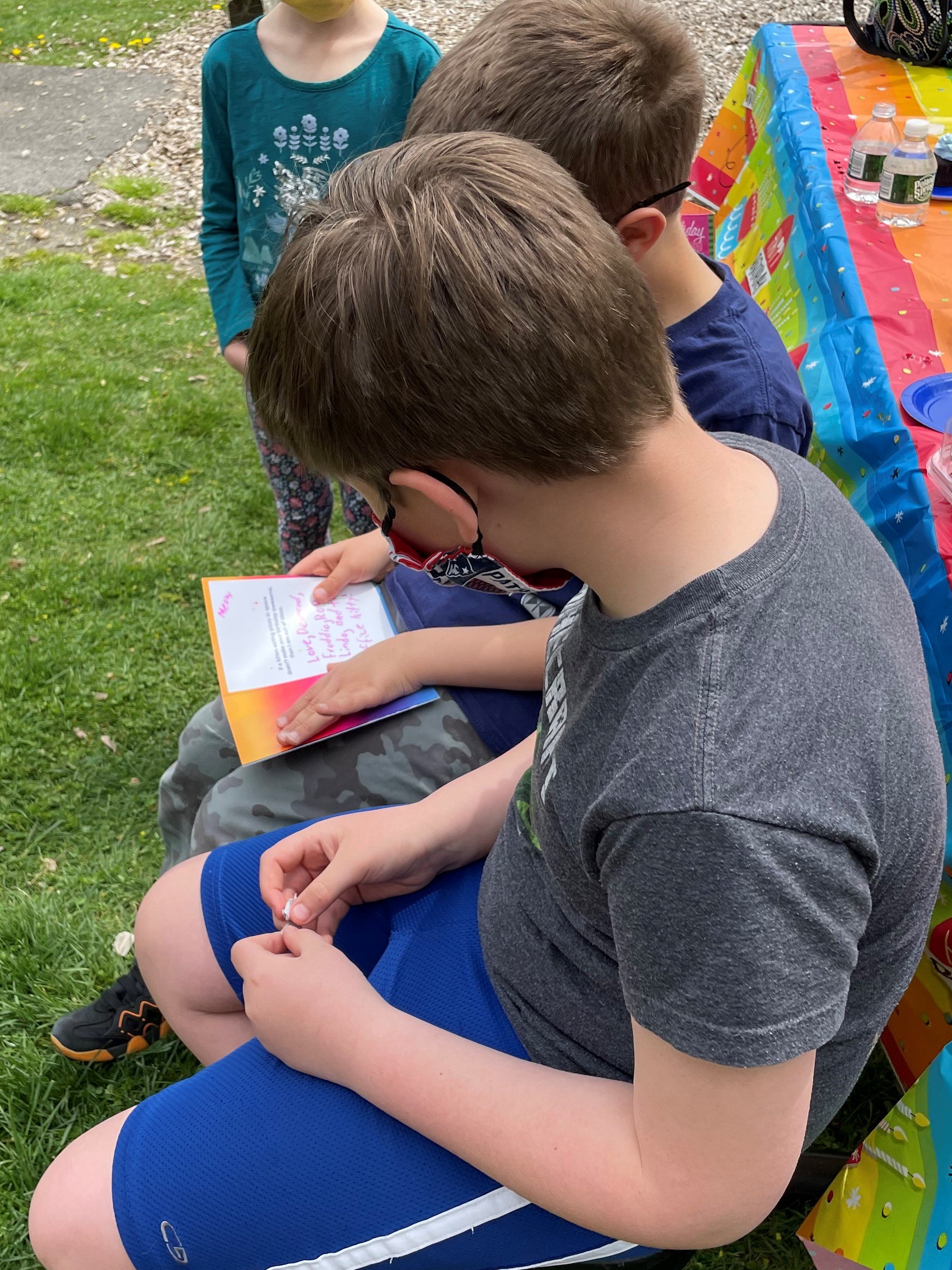
Because there weren’t too many guests, and we were outside, opening presents right after cake was an enjoyable process for Charlie and his friends. Co-regulation opportunities were created naturally as kids took turns passing gifts to Charlie, and if some guests didn’t want to watch, they had freedom to move and do other things. Opening presents provided many competent roles and productive uncertainty for Charlie, opportunity for Charlie to personally connect and form memories with each friend, and a chance for Charlie to say thank you. All important, enjoyable social moments, which this environment could support.
𝐾𝑖𝑚’𝑠 𝑖𝑑𝑒𝑎 𝑖𝑛 𝑎 𝑛𝑢𝑡𝑠ℎ𝑒𝑙𝑙: 𝐶𝑜𝑛𝑠𝑖𝑑𝑒𝑟 𝑤ℎ𝑒𝑡ℎ𝑒𝑟 𝑘𝑖𝑑𝑠 𝑐𝑜𝑢𝑙𝑑 𝑜𝑝𝑒𝑛 𝑝𝑟𝑒𝑠𝑒𝑛𝑡𝑠 𝑡𝑜𝑔𝑒𝑡ℎ𝑒𝑟. 𝑇ℎ𝑖𝑠 𝑤𝑖𝑙𝑙 𝑑𝑒𝑝𝑒𝑛𝑑 𝑜𝑛 𝑦𝑜𝑢𝑟 𝑙𝑜𝑐𝑎𝑡𝑖𝑜𝑛, 𝑡ℎ𝑒 𝑛𝑢𝑚𝑏𝑒𝑟 𝑜𝑓 𝑔𝑢𝑒𝑠𝑡𝑠, 𝑎𝑛𝑑 𝑜𝑡ℎ𝑒𝑟 𝑎𝑐𝑡𝑖𝑣𝑖𝑡𝑖𝑒𝑠. 𝑆𝑜𝑚𝑒𝑡𝑖𝑚𝑒𝑠 𝑡ℎ𝑖𝑠 𝑐𝑎𝑛 𝑏𝑒 𝑡𝑜𝑜 ℎ𝑎𝑟𝑑, 𝑏𝑢𝑡 𝑠𝑜𝑚𝑒𝑡𝑖𝑚𝑒𝑠 𝑖𝑡 𝑖𝑠 𝑝𝑜𝑠𝑠𝑖𝑏𝑙𝑒 𝑎𝑛𝑑 𝑎 𝑝𝑜𝑠𝑖𝑡𝑖𝑣𝑒 𝑒𝑥𝑝𝑒𝑟𝑖𝑒𝑛𝑐𝑒 𝑓𝑜𝑟 𝑎𝑙𝑙!
----
As I discuss in 𝐶𝑜-𝑅𝑒𝑔𝑢𝑙𝑎𝑡𝑖𝑜𝑛 𝐻𝑎𝑛𝑑𝑏𝑜𝑜𝑘, one of the best signs of a positive peer interaction is when the adults can fade back and provide support in a dynamic way, meaning be close and there to support as needed, but also thoughtfully give space to allow kids independence to figure things out on their own. Although she of course always had her eye on Charlie, I observed Kim comfortably fade back a lot of the time that day as Charlie played independently with peers.
Charlie also had his eye on Kim! He very much knows who understands him the best, who is his greatest cheerleader, and who always is his safest place. He came over to Kim from time to time to share a thought, a laugh, and a hug. These two are an amazing team! ❤️🧁
Bravo Kim!
Have a great week!

If you like my Sunday Snippets of Support, you can receive them directly to your inbox here.